

05 Jun Landscaping Ideas to Make Your Garden Room Sing
Updated August 2026
A cedar-clad garden room from Garden Rooms can transform the look of your garden on its own, but the finishing touches, the hard and soft landscaping around it, are what really make it sing.

Knowing where to start with planting, patios and lighting isn’t always obvious, so we sat down with award-winning landscape designer Dean Lacey, founder of LandArt Ltd, for his expert take on getting it right.
6 Quick Takeaways For Landscaping
- Keep your garden room visible from the house, then soften it with planting around the edges
- Add a patio nearby, ideally south- or west-facing, for afternoon and evening sun
- Low planting works best under windows; trees and taller shrubs suit the blank walls
- A wooden pergola works best away from the garden room; aluminium pergolas can complement it
- Artificial grass suits small, shaded gardens; real lawn is still best where light allows
- Keep a fire pit a few metres from the building, with a planting buffer in between
Landscaping Q&A With Dean Lacey, LandArt Ltd
What should I consider when landscaping around a garden room?
Keep the garden room visible from the house so it becomes a destination within the garden, then soften the structure with planting around its base, advises landscape designer Dean Lacey of LandArt Ltd. A patio close to the garden room is worth adding too, especially in a sunny spot.
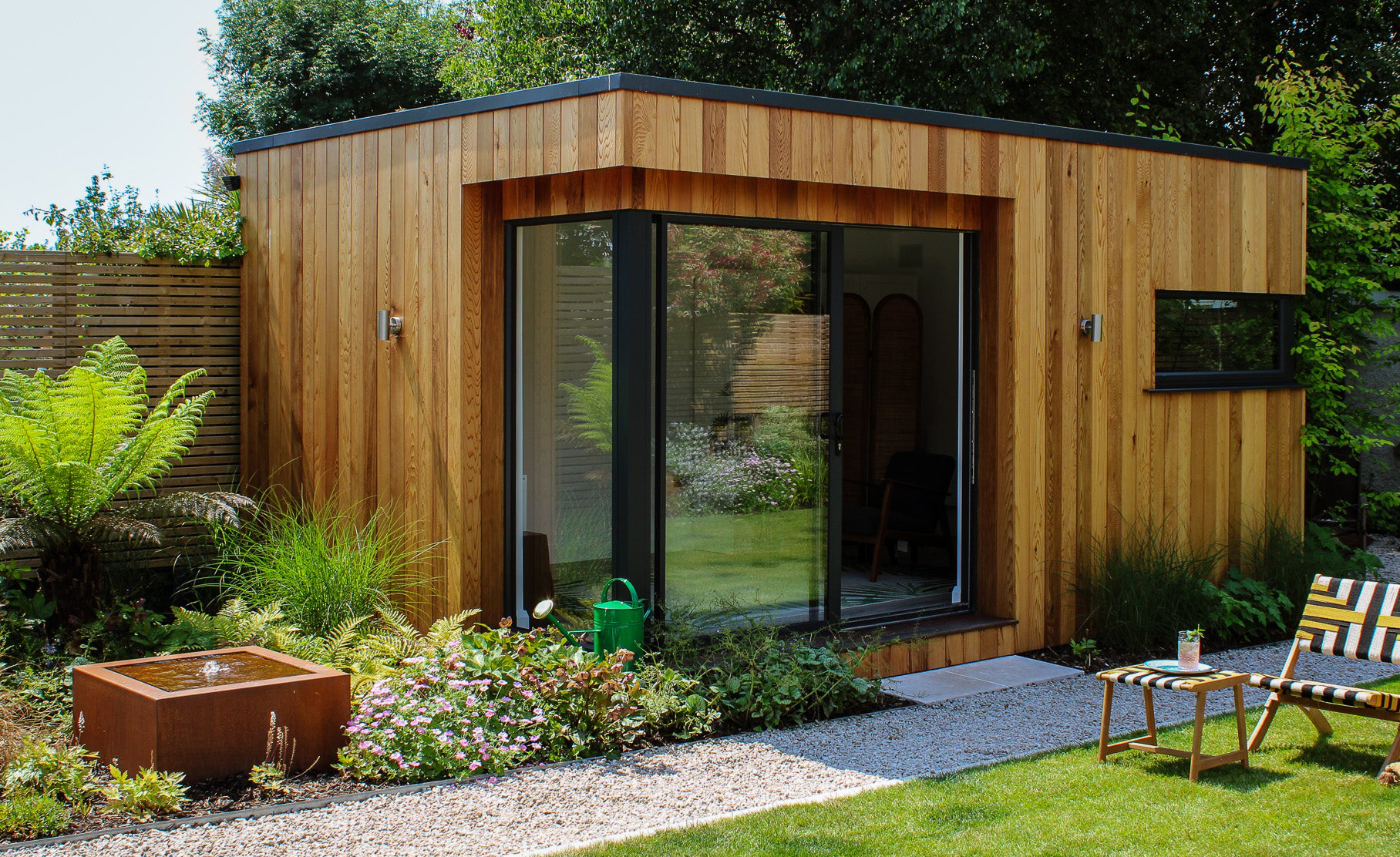
A Corten steel water feature provides a beautiful focal point beside this Cube Garden Room. Pic: LandArt Ltd
Looking out from inside, give the eye somewhere to land, such as an ornamental tree, a sculpture, or a water feature. In one LandArt design, a Corten steel water feature set within the planting became a focal point, with the sound of moving water audible through the open doors.
How do you build a planting scheme that softens a garden room?
Plant generously around a garden room, keeping anything low-growing under windows so light isn’t blocked, says Dean. Specimen trees such as Japanese maples, or flowering trees like Cornus Kousa, Amelanchier, or Malus Everest, suit blank sections of wall.
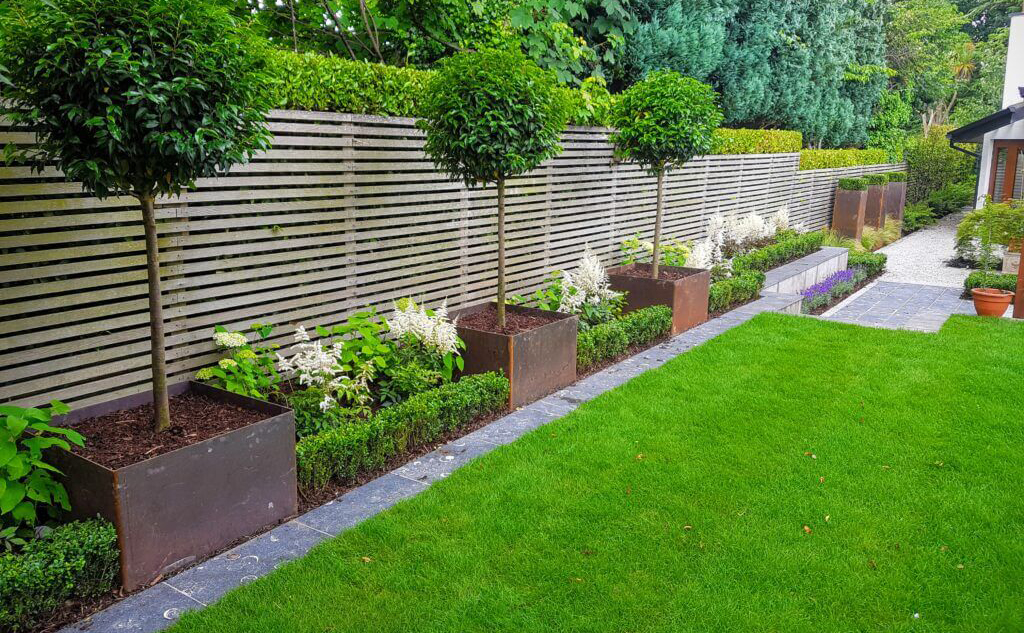
Repeat planting and Corten steel planters create a textured, contemporary scheme. Pic: LandArt Ltd
For a more contemporary feel, repeat plantings of a few species such as tall grasses interspaced into mixed perennial planting looks good. You can also use feature trees close to the building to add drama and texture.
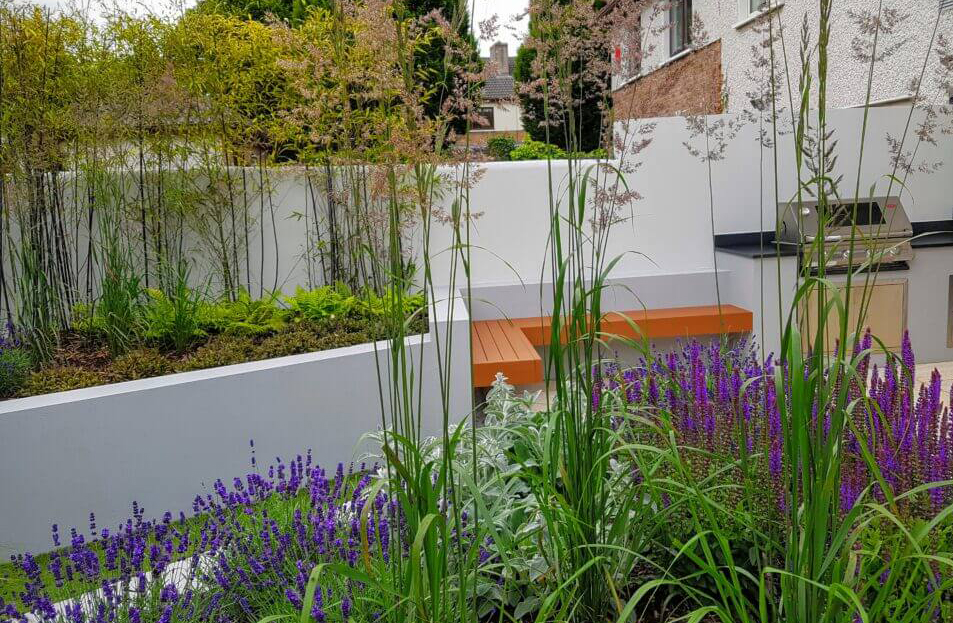
Tall grasses repeated through mixed perennial planting. Pic: LandArt Ltd
Flowering hydrangea, such as Limelight or Annabelle, gives bold summer impact against cedar cladding, while bold, leafy plants like tree ferns or Fatsia Japonica ‘Spider’s Web’ add texture.
Can a traditional planting style work with a contemporary garden room?
Yes, definitely. A garden room’s clean lines complement almost any planting style, according to Dean.
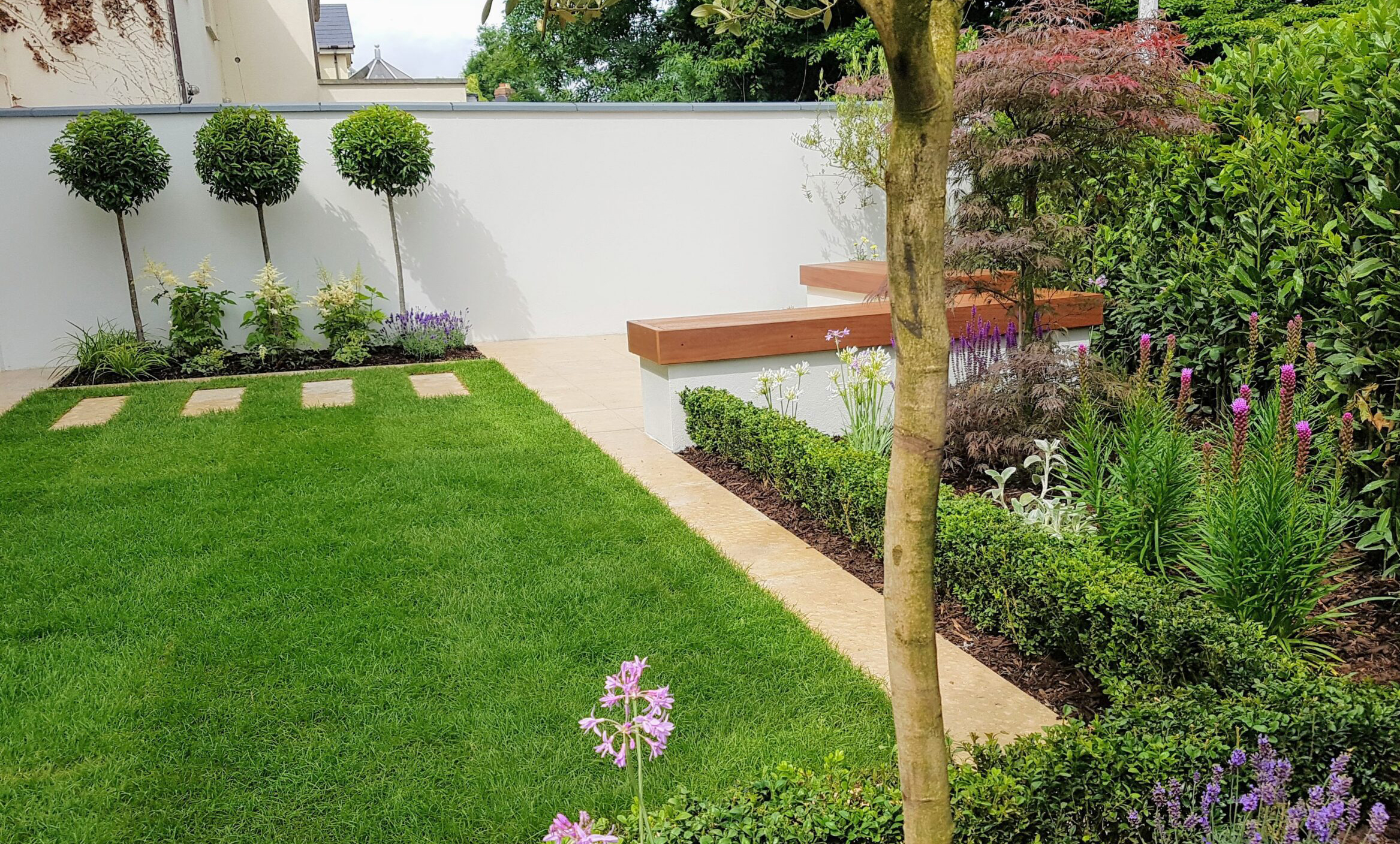
Clipped low evergreen hedges for a more traditional, formal look. Pic: LandArt Ltd
For a more formal look, clipped low hedging such as Buxus or Euonymus ‘Greenspire’ along a pathway works well.
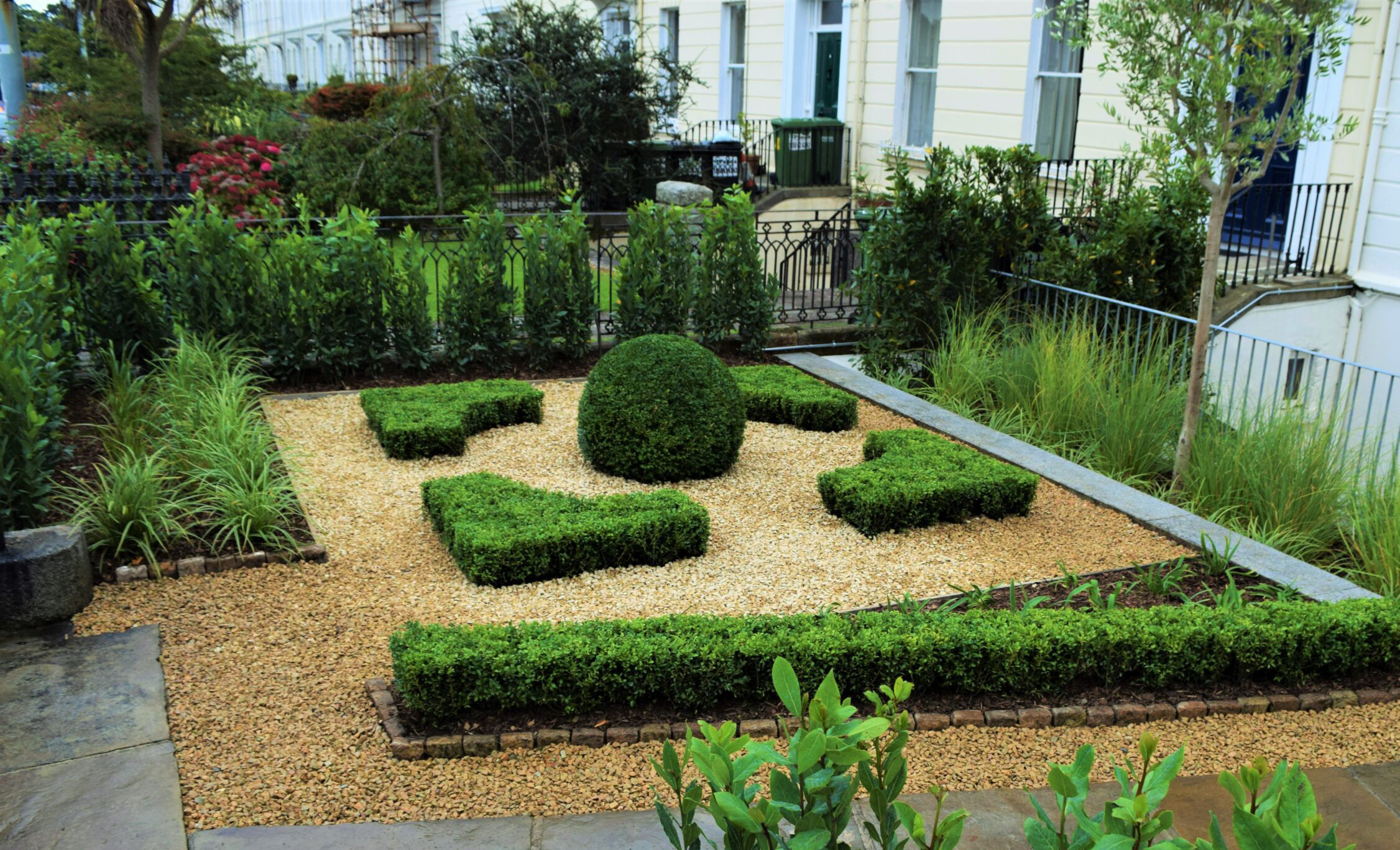
An example of a parterre garden, distinguished by its symmetrical beds, formed by low evergreen hedges. Pic: LandArt Ltd
A parterre, or a garden of symmetrical beds bordered by low evergreen hedging can look striking when set close to a garden room.
How should I plan a patio next to a garden room?
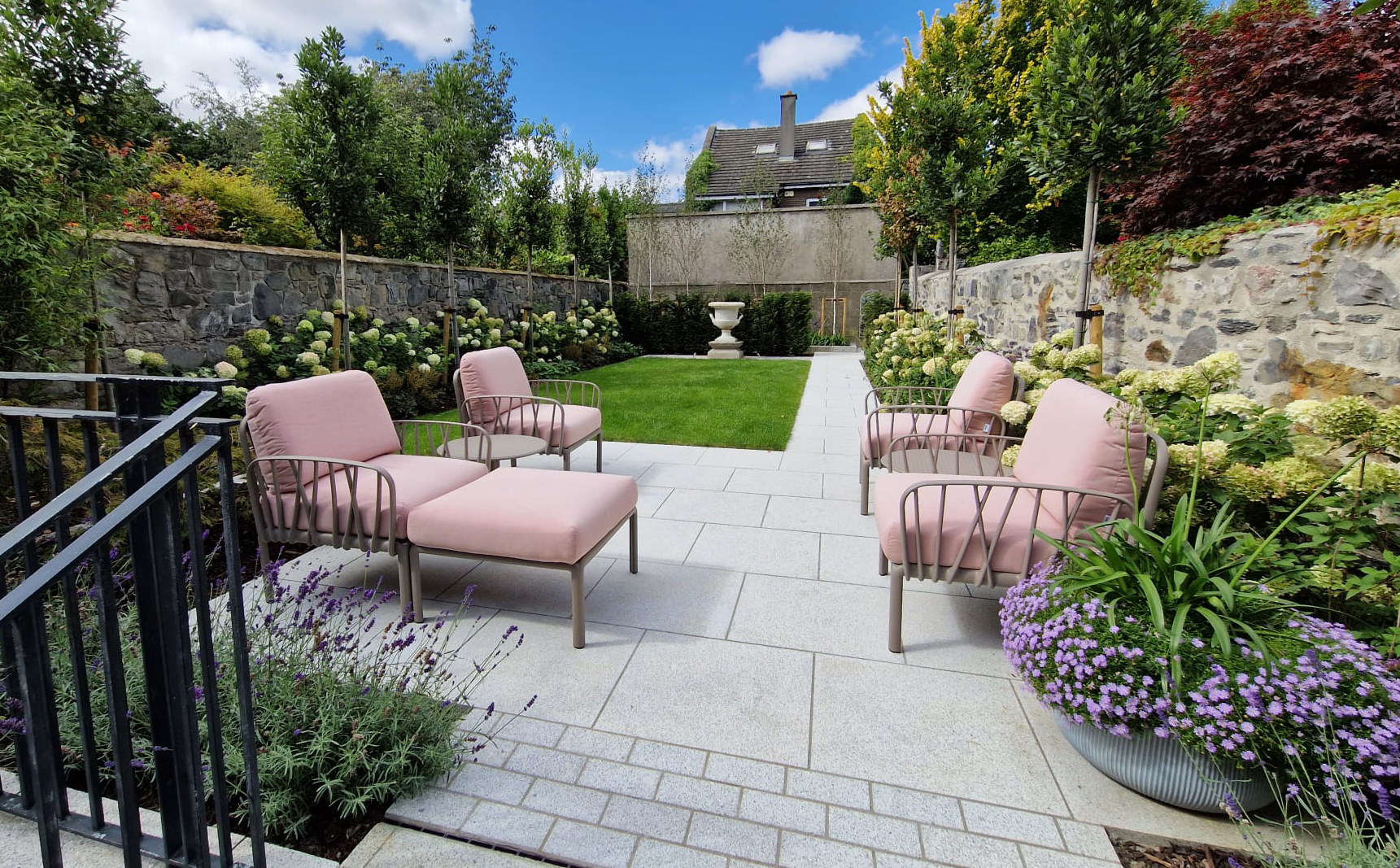
Aspect, material and size are the three things to get right, says Dean. In Ireland, most people use a patio in the afternoon and evening, so a south- or west-facing position makes the most of the available light.
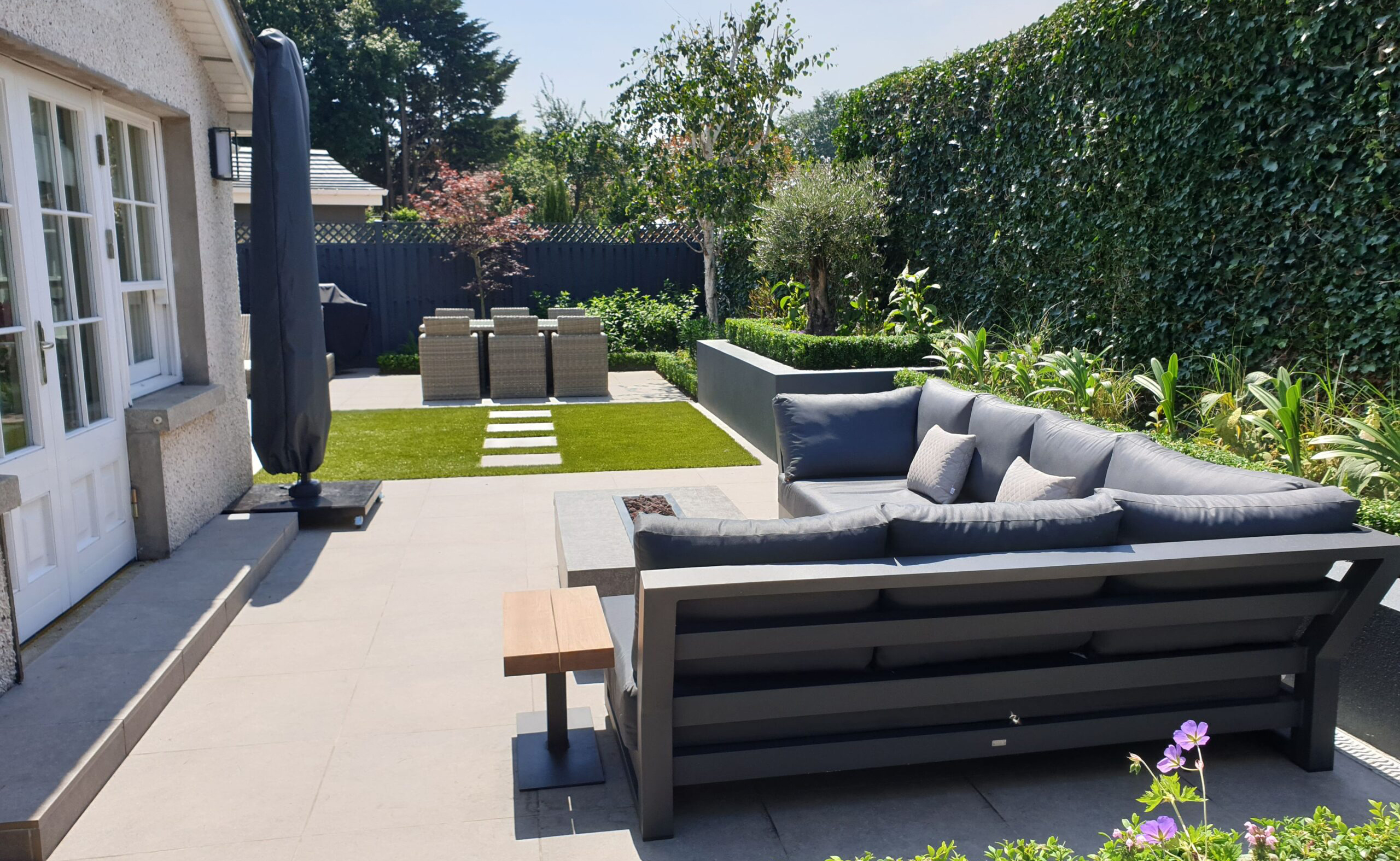
This garden was designed with two Italian porcelain patios, one for dining and one for relaxing. Each benefits from the sun at various times of the day. Pic: LandArt Ltd
When it comes to what to use for your hard landscaping, natural stone or porcelain, laid correctly, will last for decades.
A granite terrace is surrounded by sweet-smelling lavender and overflowing planters. Pic: LandArt Ltd
A patio should be big enough to use comfortably, but no bigger, and it should be kept in proportion to the rest of the garden. For example, make sure that there is room to move chairs back from a table comfortably, while ensuring there is still room left to plant around the patio’s edges to soften the hard lines.
What types of hard landscaping work best around a garden room?
Natural stone slabs like limestone, sandstone or granite will give a timeless look as well as holding up well in Ireland’s climate, though do be aware these will be at the higher end of the price range.
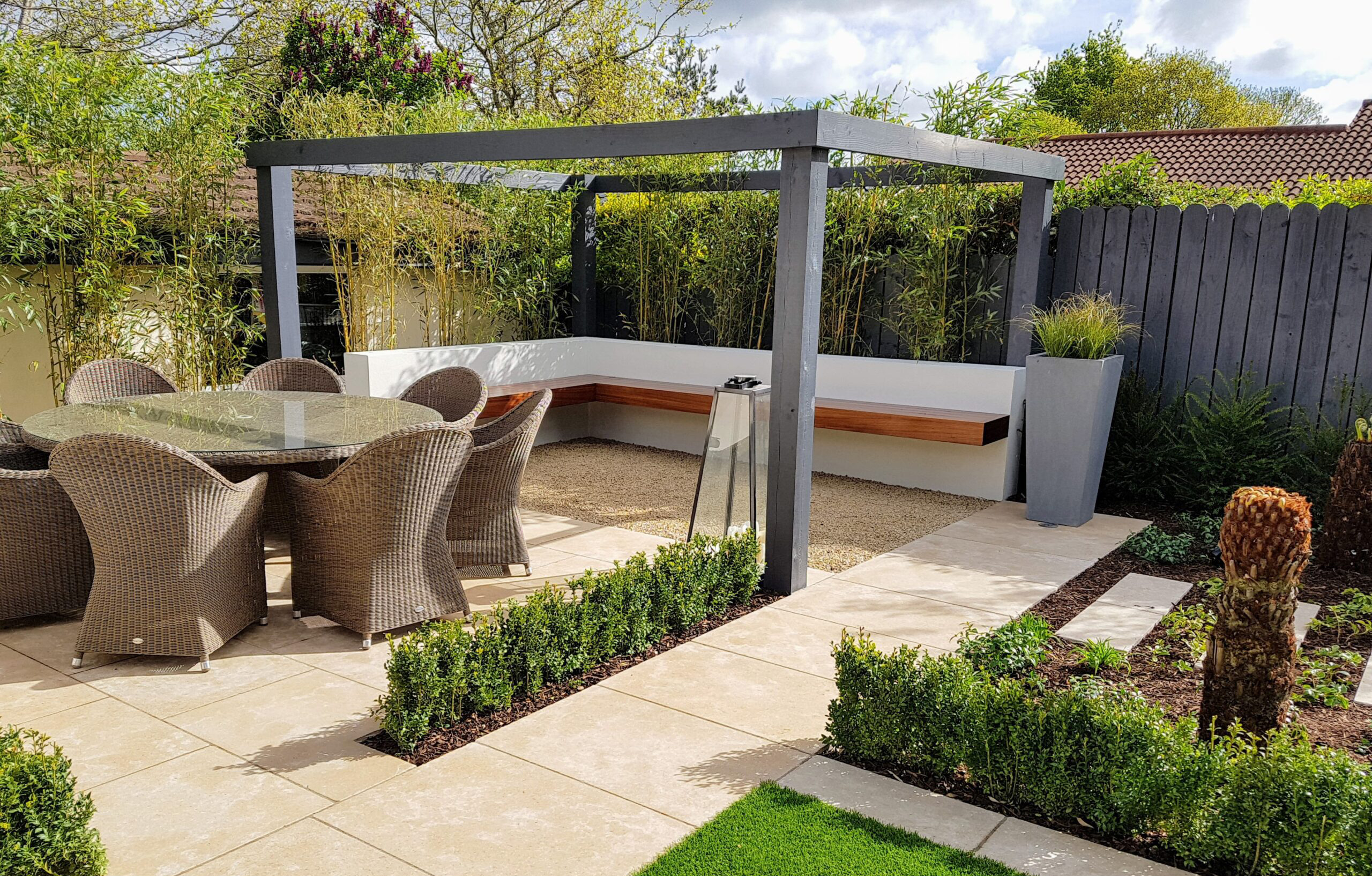
Pavers, gravel and a custom floating bench show what’s possible with hard landscaping. Pic: LandArt Ltd
Brick or clay pavers can look great, and porcelain paving has also become a popular choice for garden rooms. It’s frost-resistant, low-maintenance, and available in large-format slabs that suit a contemporary look, often mimicking stone or concrete at a lower cost.
Terrazzo, made from marble or granite chips set in cement or resin, is a designer option that gives a more distinctive, decorative finish, and can also be run from inside to the outside, which can be a great choice if you want a truly seamless result. It is expensive, however, and requires specialist professional installation.
Composite decking or composite paving boards are another durable choice. A low-maintenance alternative to timber, composite materials resist rot and fading, and can work well where a softer, warmer material is wanted near a garden room’s cedar cladding.
Concrete or standard tiles are the most budget-friendly option, though they’re more prone to staining and algae over time than porcelain or natural stone.
Is a pergola a good addition next to a garden room?
Yes, it can be, but position a wooden pergola away from the garden room where possible, advises Dean. That’s because both are strong features in their own right and can end up competing for attention. Wooden pergolas add height and drama and are great for climbing plants, but offer little real shelter or shade.
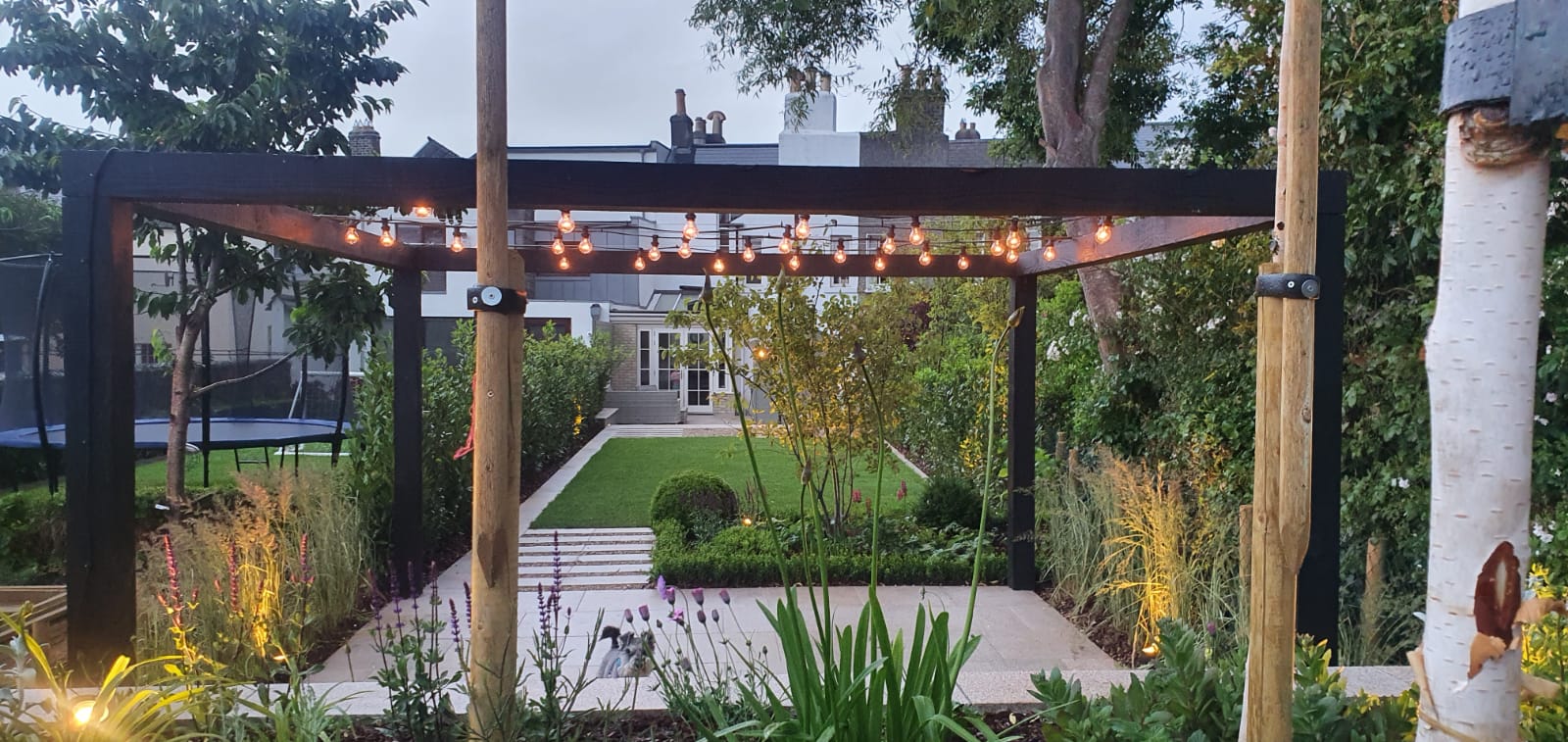
A bespoke wooden pergola creates height and drama. Pic: LandArt Ltd
For actual shelter, a covered pergola works better over a patio or dining area. Aluminium pergolas, which often have louvred or retractable roofs, finished in a dark powder coating, are increasingly popular in Ireland, and tend to complement a garden room well.
Artificial grass or real lawn, which is better around a garden room?
Real lawn is always preferable where a garden has enough light and space, and Dean recommends it for larger gardens. But as gardens get smaller, real lawn often struggles without enough light.
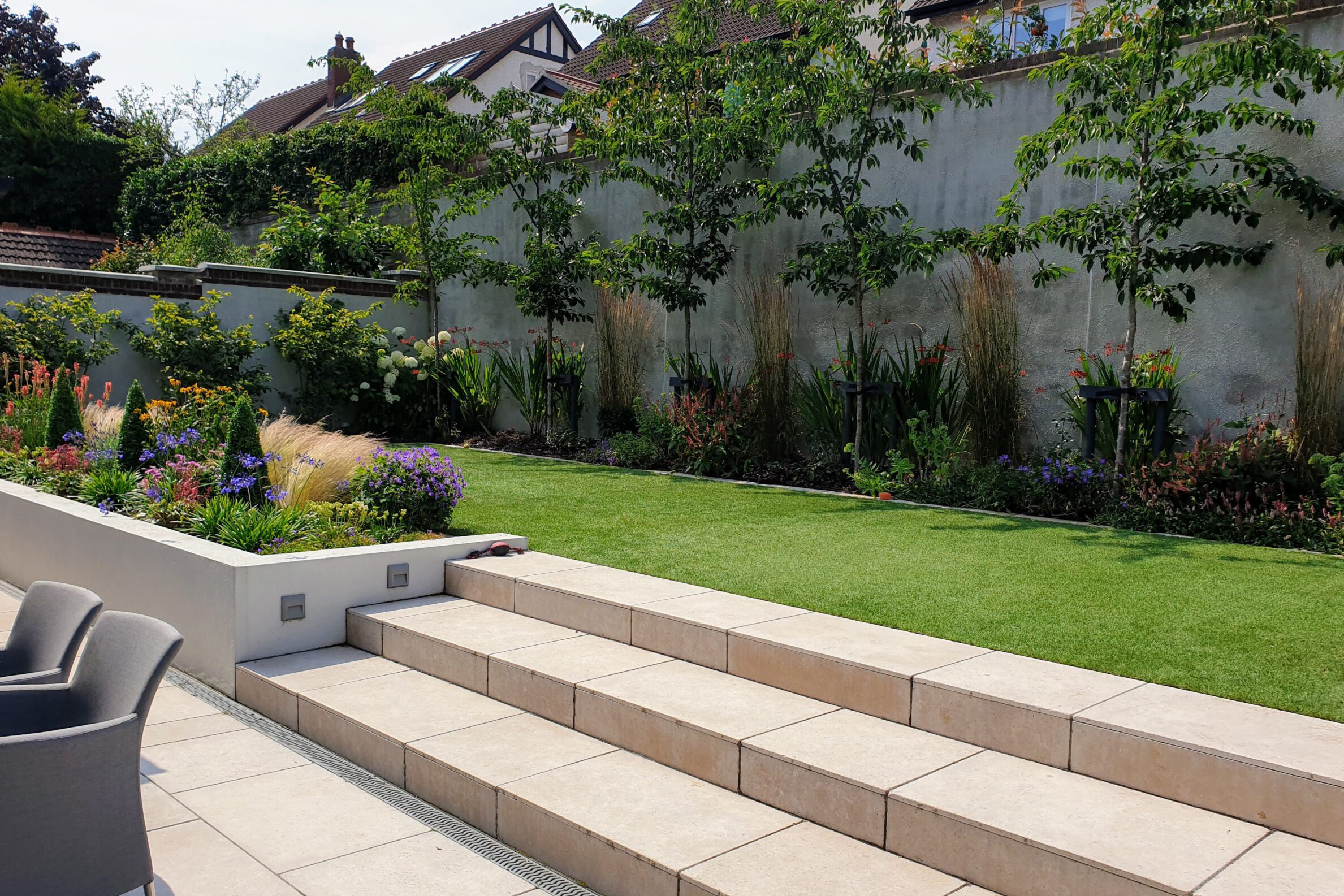
Artificial grass is a good option if the garden lacks light. Pic: LandArt Ltd
Artificial grass can be a good choice for small, shaded gardens, and is particularly practical for families with young children and pets, because it is low-maintenance, usable year-round, with no mud tracked back into the house.
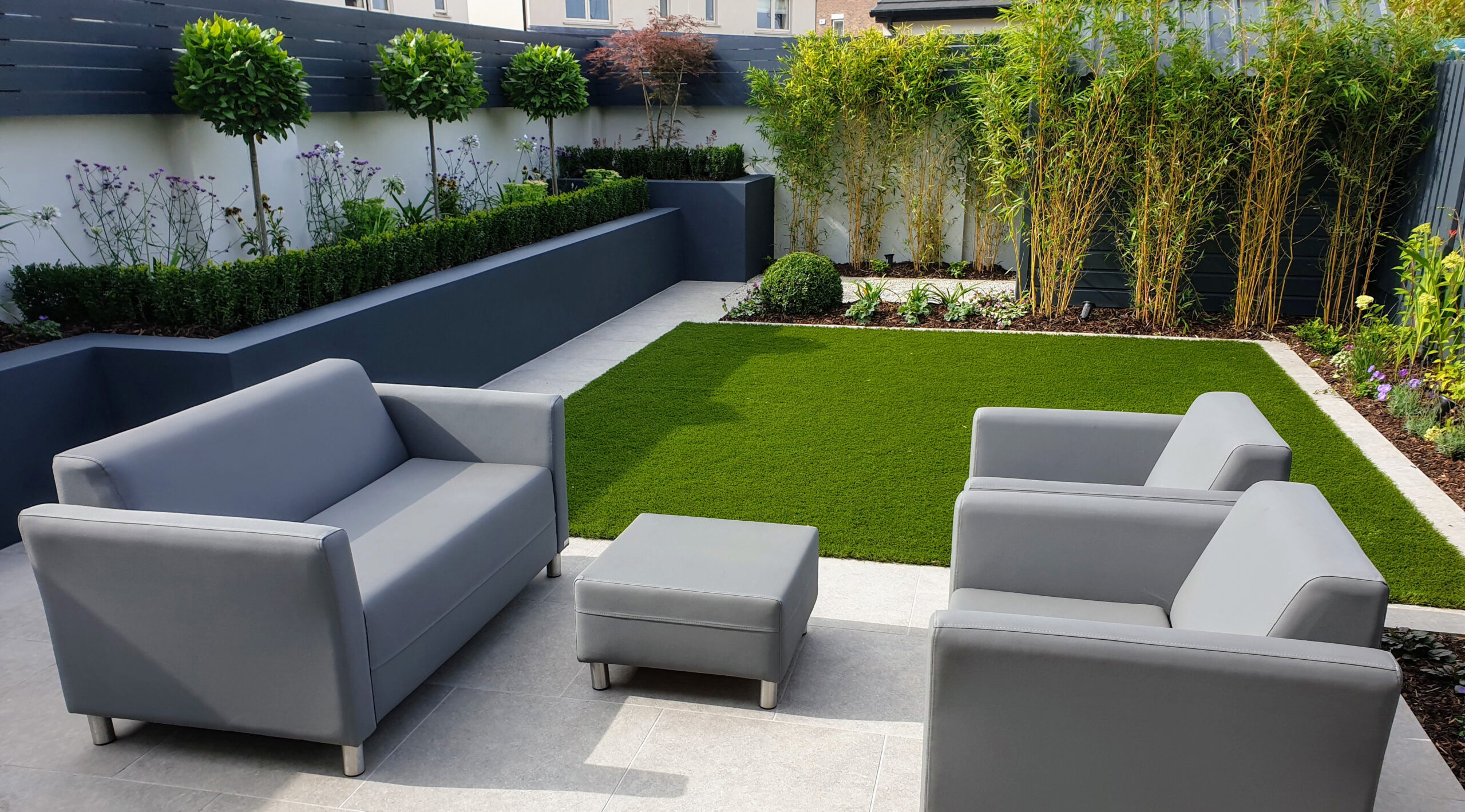
Artificial grass is a practical, low-maintenance option for smaller gardens. Pic: LandArt Ltd
Visit our Success Stories section to see how some of our customers have situated their garden rooms within their gardens.
Why does lighting matter for a garden room’s landscaping?
Lighting is essential, not an afterthought, says Dean Lacey of LandArt Ltd. Spike uplighters for trees, in-ground lighting for anywhere walked or driven over, and bollard lighting along paths or driveways are all popular choices.
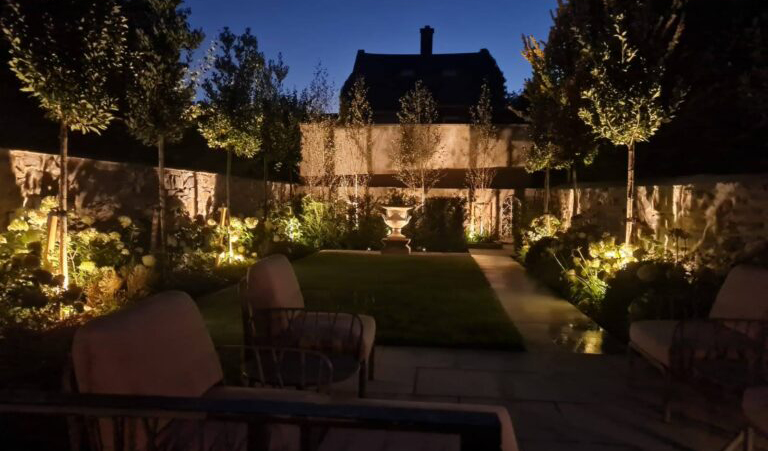
A thoughtful lighting scheme highlights the main features and creates an impressive outdoor scene as viewed from the house and terrace. Pic: LandArt Ltd
Properly planned lighting transforms a garden at night and encourages people to actually use it after dark, not just during the day.
Can I add lighting to the outside of my garden room?
Yes, you can. Our electrical package includes three outside LED spotlights in a brushed chrome finish, and two up/down lights, also in a brushed chrome finish.
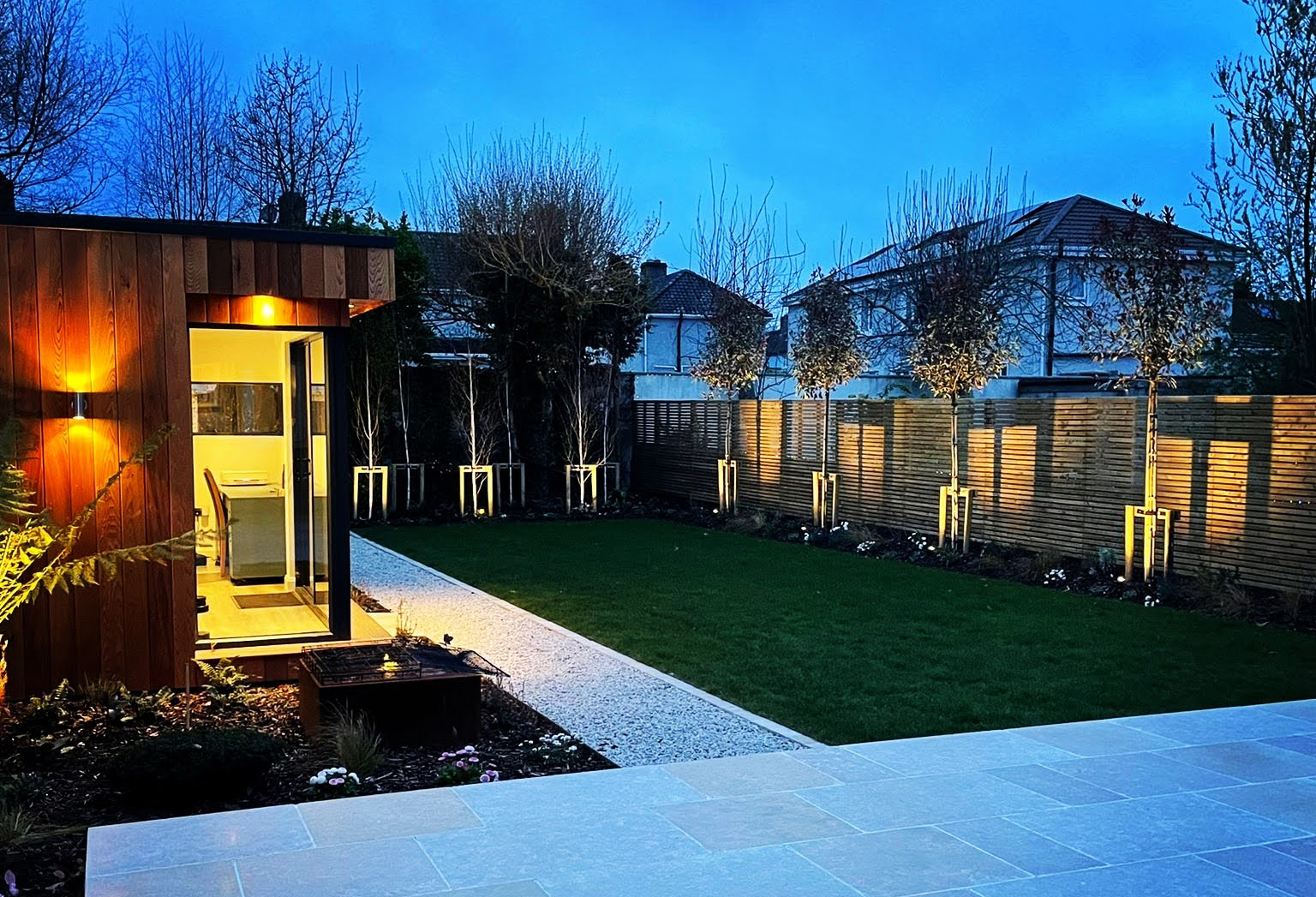
The lighting scheme creates a beautiful night-time view of this Cube Garden Room. Pic: LandArt Ltd
Is it safe to put a fire pit near a garden room?
Yes. A fire pit is a great addition near a garden room, and the building itself can offer some shelter, says Dean. Keep it a few metres from the structure, with a buffer of planting in between, to maintain a safe distance.
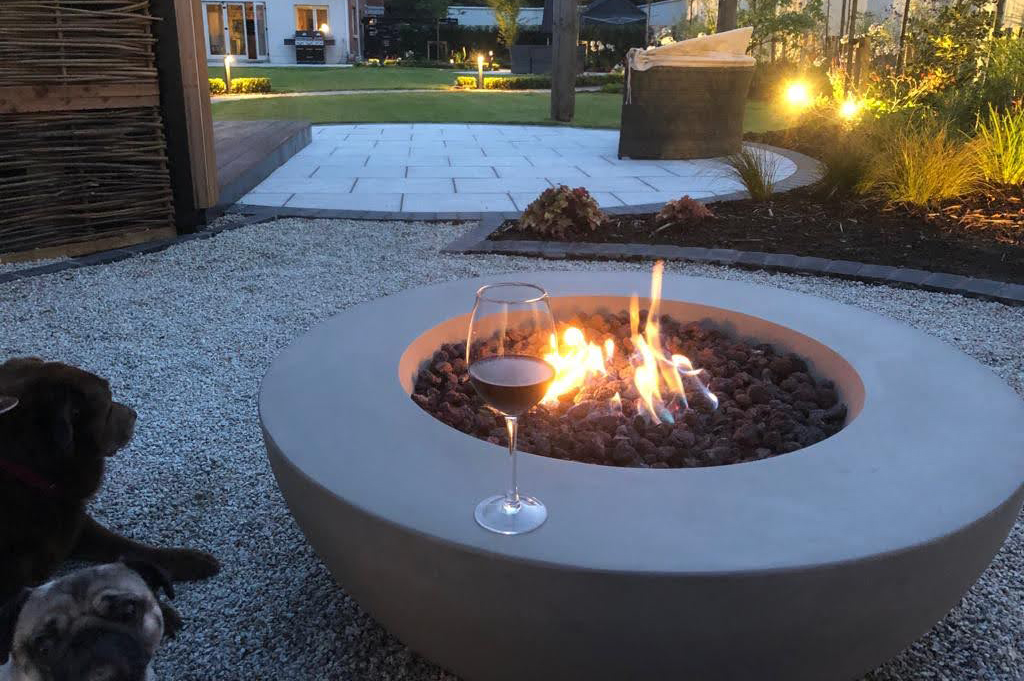
A firepit beside the garden room offers the perfect place to spend those summer evenings. Pic: LandArt Ltd
Is hiring a landscape designer worth it for a garden room project?
A landscape designer helps get the fundamentals right from the start, says Dean. His own process begins with listening to how a client will actually use the space. That means the plans will fit their lifestyle rather than creating a generic result.
A designer also helps make the most of the available space and light. To add real value, along with your garden room, include a good-sized patio, planting and lawn, lighting, and storage. The result will be a well-designed garden that complements your garden room, extends your inside living space, and which changes with the seasons.
Do I need planning permission for landscaping around a garden room?
Generally, no. Routine landscaping like planting, a patio, or a standard-height fence or hedge doesn’t need planning permission in Ireland. If you’re planning a taller boundary wall, a large pergola structure, or anything close to a boundary, it’s worth checking with your local authority first. See our Planning Permission page for the current garden room exemption limits.
When’s the best time of year to landscape around a new garden room?
In Ireland, spring and autumn are generally the best windows for planting, when the soil is workable and plants aren’t stressed by summer heat or winter frost. Hard landscaping, like patios and paths, can usually be done at any time of year, weather permitting, which makes it sensible to plan those first if your garden room build and landscaping are happening close together.
Garden Rooms & Landscaping: The Dream Combination
If you’re considering a garden room and want to see the Cube, Ultimate and Bespoke ranges in person, visit the Garden Rooms showroom just off the M50 at exit 5.
Book a showroom visit online, call 01 864 2888, or email info@gardenrooms.ie.